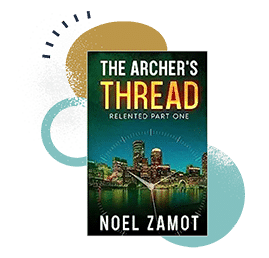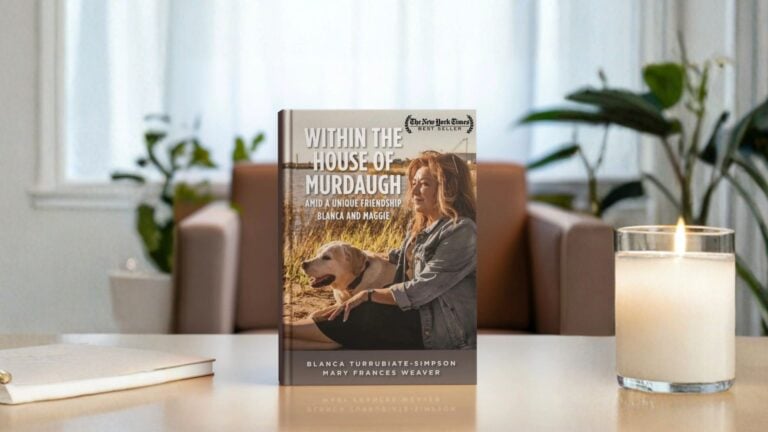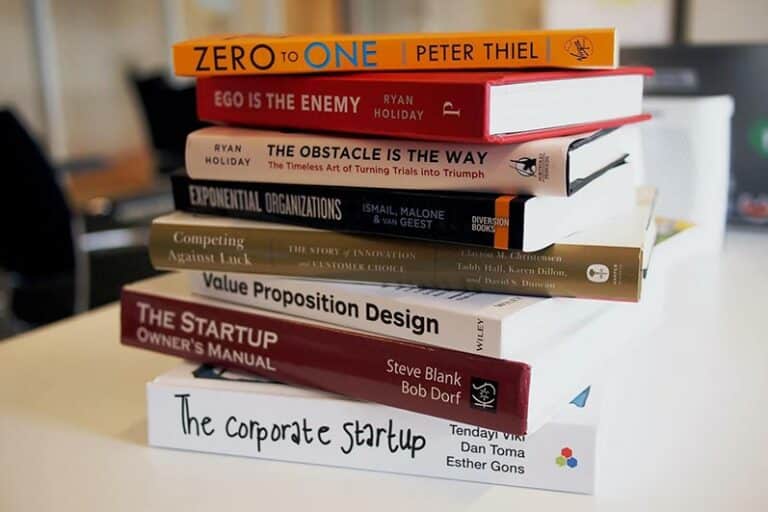
Stroll down the aisles of your local bookstore or library, and you’ll find books neatly sorted into dozens of genres like fantasy, romance, and true crime. These categories help readers find books that suit their moods and preferences. Genres also make it easier for writers to map out plots, advertise books, and reach the right audience. If you want to publish a book, you can start your journey by reading Palmetto Book Publisher’s handy guide to the differences between fiction vs. non-fiction books and their most popular genres.
Most books fall into one of two broad categories: fiction and non-fiction. Each type has specific conventions that all authors should know. Here’s a simple breakdown.
Fiction books tell stories with unreal elements that spring from their authors’ imaginations. They include invented characters, locations, objects, or plots. For example, a fiction book could feature talking animals, focus on a hero’s adventure through the underworld, or recount the experiences of an imaginary spy.
Humans have been making up stories for thousands of years. Literature experts suggest that “ The Epic of Gilgamesh” may be the first recorded work of fiction. This mythologized poem was created around 2,000 B.C. and focuses on the adventures of the heroic King Gilgamesh.
Since then, writers have created countless fictional genres, ranging from fantasy books to thriller novels. While each genre has unique tropes, all fiction books tend to share a few key traits, including:
You fully control all these elements when you write a fiction book, so your imagination is the only limit for your story.
Authors use their imagination to create fiction books, but non-fiction books are strictly based on facts and reality. Many writers conduct extensive research to ensure that their non-fiction is as accurate and unbiased as possible. For example, if you write a book about a famous racehorse, you may interview its handlers and research its bloodlines.
Typical elements of non-fiction books include:
Unlike fiction books, non-fiction books may be carefully scrutinized for accuracy by readers, so you should aim to tell a truthful and well-informed story.
Some book genres can be classified as either fiction or non-fiction, depending on their content. For instance, the children’s books genre includes both fiction and non-fiction texts. For example, a picture book filled with facts about caterpillars counts as non-fiction, while a fantasy chapter book about dragons will fall into the fiction category.

Fiction writers can invent unique stories in dozens of genres and sub-genres. Each category attracts particular readers and has special narrative conventions. Here are a few of the most popular fiction book genres.
Fantasy books include magical, mythical, or paranormal elements. Some fantasy novels take place in an imaginative world that bears little resemblance to our own, like J. R. R. Tolkien’s Middle Earth and Ursula K. Le Guin’s Earthsea. Other fantasy books have a mostly realistic setting with a dash of magic, such as Octavia Butler’s Kindred and R. F. Kuang’s The Poppy War.
Standard tropes of fantasy books are:
Need inspiration? Check out popular fantasy authors like J. K. Rowling, N. K. Jemisin, Nnedi Okorafor, and Neil Gaiman.
As the name suggests, historical fiction books retell actual events that took place in the past but add in fictional elements. They often narrate true occurrences from the perspective of a historical figure or an imaginary character. For example, Hilary Mantel’s Wolf Hall centers on Thomas Cromwell during his rise to power in the 1500s.
Other historical fiction books rewrite history by including imaginary events or inventing alternative endings for real incidents. Colson Whitehead’s The Underground Railroad reimagines the metaphorical network of abolitionists who secretly transported slaves to freedom as a literal train system.
Characteristics of historical fiction books include:
Famous historical fiction books include Anita Diamant’s The Red Tent, Diana Gabaldon’s Outlander, and Stephen King’s 11/22/63.
Mystery books invite the audience to try to solve a crime or puzzle alongside the protagonist. There are many subgenres of mystery fiction. For instance, cozy mysteries like Laurie Cass’s Landing a Pawavoid graphic violence and focus on amateur protagonists, such as small-town librarians. By contrast, noir mysteries often feature a gritty atmosphere and deeply flawed protagonists, like tough-guy private eye Philip Marlowe in Raymond Chandler’s The Big Sleep.
Common traits of mystery books include:
Popular mystery books include Agatha Christie’s Murder on the Orient Express, Gillian Flynn’s Gone Girl, and Walter Dean Mosley’s Fearless Jones.
Romance books focus on characters who fall in love, and these stories typically have happy endings. Romances can occur in many different eras, settings, and situations, so this broad genre includes dozens of subgenres. For example, you can write a historical romance set in colonial America or a paranormal romance that depicts a protagonist falling for a vampire.
Romance fiction includes many tropes, such as:
Popular romance books include Aiden Thomas’s Cemetary Boys, Kevin Kwan’s Crazy Rich Asians, and Nicholas Sparks’s A Walk to Remember.
Science fiction books explore how real or imaginary technologies impact humans, the environment, and other planets. Many science fiction books take place in outer space, while others are set in a world much like ours. This category includes a wide range of subgenres. For example, apocalyptic fiction imagines the end of the world, and cyberpunk books blend gritty settings with futuristic technology.
Here are typical characteristics of science fiction books:
Famous examples of science fiction books include Nancy Farmer’s The Ear, the Eye, and the Arm, Orson Scott Card’s Ender’s Game, and Jeff Vandermeer’s Annihilation.
Thriller books revolve around high-stakes and suspenseful plots. They aim to keep the audience on the edge of their seats and often include action-packed sequences of events. The protagonist may race to stop an assassin, destroy a bomb, or infiltrate a foreign government. Trendy thriller subgenres include crime thrillers, political thrillers, and spy thrillers.
Defining traits of the thriller genre include:
Looking for excellent thrillers? Try Alyssa Cole’s No One Is Watching Us, Paula Hawkins’s The Girl on the Train, and Stieg Larsson’s The Girl with the Dragon Tattoo.

Like fiction, non-fiction offers an enormous array of genres and subgenres. You can choose the category that aligns best with your message and purpose. Let’s review the most common non-fiction genres.
Autobiographies share their writers’ life stories chronologically from childhood to the present. An autobiography offers a deep dive into the author’s personality and provides a factual account of important events in their life. Many autobiography writers are already famous, but regular people can also write in this genre. For example, James Herriot’s If Only They Could Talk recounts his experiences as a veterinarian in Yorkshire, England.
Here are typical conventions of autobiographies:
Some of the most famous autobiographies are Anne Frank’s The Diary of a Young Girl, Frederick Douglass’s Narrative of the Life of Frederick Douglass, an American Slave, and Maya Angelou’s I Know Why the Caged Bird Sings.
Biographies narrate a real person’s life from an outsider’s perspective. Like autobiographies, biographies generally recount pivotal moments in a person’s life and examine their societal impact. Biographies can provide more factual and unbiased accounts than autobiographies, but they don’t capture the subjects’ innermost thoughts.
Characteristics of the biography genre include:
If you want to read well-known biographies, check out Les Payne and Tamara Payne’s The Dead Are Rising: The Life of Malcolm X, Martin Gilbert’s Churchill: A Life, and Sylvia Nasar’s A Beautiful Mind.
Business books teach readers secrets to business success. Successful entrepreneurs typically write books in this genre. These authors provide non-fiction accounts of their journeys through the corporate world and share strategies with the audience.
Business books often include these characteristics:
Popular business books include Robert Kiyosaki’s Rich Dad, Poor Dad and Steven D. Levitt’s Freakonomics: A Rogue Economist Explores the Hidden Side of Everything.
Non-fiction religious books delve into deep topics like faith, religious history, and spirituality. Writers often use this genre to teach readers about their religion and motivate the audience to engage in spiritual practices. These books can provide insight into many religions, including Christianity, Hinduism, Judaism, and Sikhism.
Here are a few popular elements of religious books:
Famous religious books include Joel Osteen’s Become a Better You, Landra Young Hughes’s Where Is God in This?, and Max Lucado’s When God Whispers Your Name.
Inspirational books make readers feel hopeful and motivated. Non-fiction books in this genre can cover topics like business, health and fitness, politics, and sexuality. They encourage the audience to have more positive attitudes and take action to improve their lives. For example, Paulo Coehlo’s The Alchemist invites readers to pursue their dreams.
Typical characteristics of inspirational books include:
Great examples of inspirational books include Casper Ter Kuile’s The Power of Ritual, Mia Violet’s Yes, You Are Trans Enough, and Fumio Sasak’s goodbye, things.
Selecting a fiction or non-fiction genre is only the first step to writing a successful book. Outlining, drafting, editing, and publishing your book takes commitment, knowledge, and time. Luckily, Palmetto Book Publisher offers plenty of resources to help you get started.
Here are a few tips for writing a great fiction book:
These strategies can help if you’re writing non-fiction:
You can also check out more free writing resources on Palmetto Book Publisher’s blog to help you get started.
Ready to share your fiction or non-fiction book with the world? Palmetto Book Publisher is a top-tier publishing company that offers many affordable and convenient services for authors. Our skilled team has years of publishing experience, which means we can help you with any stage of the writing and publishing process.
We assist writers in every genre and industry. Our services include:
Get in touch today to learn more about how Palmetto Book Publisher can help you polish your fiction or non-fiction book and get it into the hands of interested readers.
Or give us a call+0 000 000 0000